A Sorority Reveal Got Called 'Black Mirror.' The Real Horror Is How Normal It Is.
A video of college women opening their sorority bid letters went viral again, and the reaction was not delight but dread. The most telling part: the people most disturbed by it are the ones who like sororities.
Engage ↓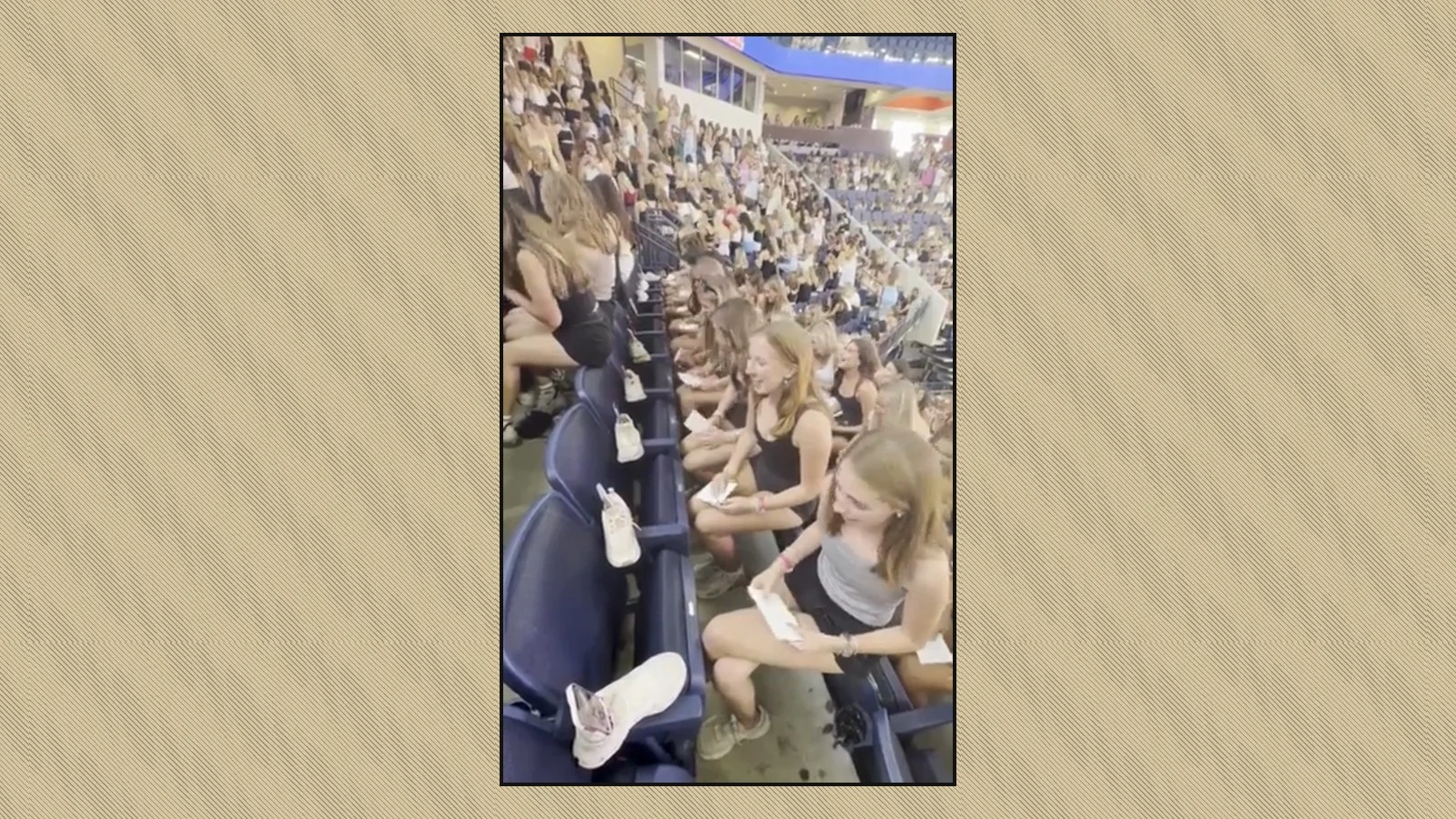
A video of American college women opening their sorority bid letters, the envelopes that tell them which house has accepted them, went viral again this month, and the reaction was not delight. It was dread. One viewer's verdict, quoted by the Spanish outlet 20minutos, set the tone: "Black Mirror se quedo cortisimo," or "Black Mirror fell way short."
What unsettles people is not a scandal. It is the sameness: rows of young women, the same poses, the same phone angles, the same choreographed countdown, the same scream on cue. The clip below is one such reveal.
This is not new, and it is not an accident
The genre has a name: RushTok, the wave of sorority recruitment content that took over TikTok starting in 2021, centered on the University of Alabama, where recruitment is an eight day production and "Bama Rush" became a full cultural event, per TODAY. Max released a documentary, Bama Rush, in 2023 that dug into the money, the self image pressure, and the history the ritual carries, as CNN covered.
So when a bid day clip reads as dystopian, it is worth being precise about why. The uniformity is the point. Sororities are in the business of belonging, and belonging has always been signaled by looking and moving alike. Uniforms, marching bands, weddings, military drill: humans have staged synchronized conformity for as long as we have had groups. The only new variable is that a phone now films it in unison and an algorithm rewards the most uncanny frames.
At a glance
- The reaction
- A viral video of college women opening sorority bid letters drew "dystopian" and "cult-like" reactions, summed up by a viewer's line quoted by 20minutos: "Black Mirror fell way short."
- What people react to
- Not a scandal, but the uniformity: matching poses, identical phone angles, a synchronized countdown and reveal.
- The genre
- RushTok, sorority recruitment content that went viral on TikTok from 2021, centered on the University of Alabama ("Bama Rush").
- The context
- Max released the documentary "Bama Rush" in 2023, examining the cost, image pressure, and history behind the ritual.
- The twist
- The most cited unease comes from self-described sorority supporters, not critics, which suggests the discomfort is about the format, not the women.
Our read: the discomfort is ours, not theirs
Here is the part the "Black Mirror" headlines skip. The most quoted reaction to these videos, again via 20minutos, came from someone who likes sororities: "I am pro sorority and these are nice, normal girls, but this horrifies me." Read that twice. The unease is not coming from critics of Greek life. It is coming from sympathizers who cannot square the individual women, who seem perfectly happy, with the mass produced image the format creates.
That gap is the actual story, and it is not about the women. It is about us. A decade of dystopian television has trained us to read synchronization as sinister, so a group of nineteen year olds enjoying a ritual gets processed as a cult. The women are not performing horror. We are projecting it.
The genuinely Black Mirror element is the loop around the clip: a private moment of joy, filmed for an audience, harvested for outrage, and turned into a headline by an outlet that pulled one spicy comment to do it. We are aware that writing this makes us part of that loop.
Ad Watch News is an independent commentary site. We are not naming or identifying anyone in the clip, which circulated widely on social media. The quotes above are drawn from the outlets linked in the text and listed below. The opinions are ours.